Afghanistan earthquake: Death count crosses 1,400 as rescuers race against time to find survivors

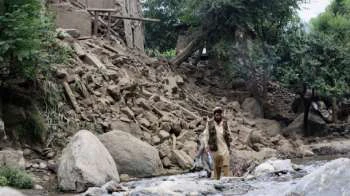
Afghanistan earthquake: The death toll from the devastating earthquake in eastern Afghanistan has climbed past 1,400 with more than 3,000 others injured, Taliban spokesman Zabihullah Mujahid said on Tuesday on social platform X.
Rescue efforts are under way in what a UN official described as a “race against time” to reach mountainous, hard-to-access areas devastated by Sunday’s 6.0-magnitude quake. Officials have warned that the number of casualties could rise significantly.
The quake struck several provinces, causing widespread destruction. Entire villages were flattened, with residents trapped under collapsed mud and wood houses that were unable to withstand the shock. Rugged terrain continues to slow relief operations.
“We cannot afford to forget the people of Afghanistan who are facing multiple crises, multiple shocks, and the resilience of the communities has been saturated,” said Indrika Ratwatte, the UN’s resident coordinator for Afghanistan. He added, “These are life and death decisions while we race against time to reach people.”
Afghanistan earthquake: Earthquakes in Afghanistan
This is the third major earthquake since the Taliban took power in 2021, compounding a series of crises in the country, which is already reeling from severe aid cuts, a struggling economy, and the forced return of millions of Afghans from Iran and Pakistan.
Ratwatte noted that the construction of homes in the area worsened the impact: “When the walls of wooden and mud homes collapse, the roof falls onto the occupants, causing injury or death. While the area was low-density, the earthquake struck when everybody was asleep. If you were to model it based on what has happened before, clearly there’s no question that the casualty rate is going to be rather exponential.”
The Taliban government, recognised only by Russia, has appealed for international assistance. But help has been slow, as donor nations face competing global crises, reduced aid budgets, and concerns over the Taliban’s restrictive policies on women and girls, including a ban on their work in NGOs. Earlier this year, the US cut back its aid to Afghanistan, citing worries that funds were reaching the Taliban.
Kate Carey, deputy head of the UN Office for the Coordination of Humanitarian Affairs in Afghanistan, highlighted the collapse of health services in the region. She said more than 420 health facilities had closed or been suspended due to a “massive reduction” in funding, including 80 in the eastern region hit hardest by the quake.
“The consequence is that the remaining facilities are overwhelmed, have insufficient supplies and personnel, and are not as close to the affected populations as the more local facilities at a time when providing emergency trauma care is needed in the first 24 to 72 hours of the earthquake response,” Carey said.