Bondi beach shooting: Philippines authorities say Sajid Akram was an Indian national

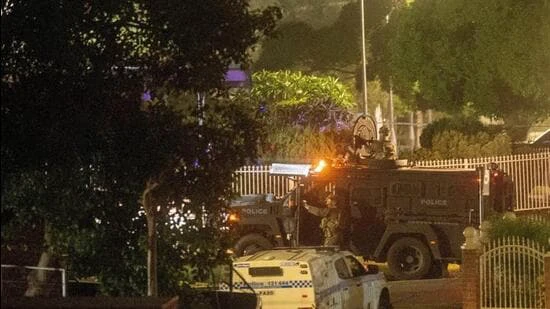
Bondi beach shooting:Sajid Akram, the 50-year-old killed during a terror attack on a Jewish gathering in Australia, was an Indian national, the Philippines’ Bureau of Immigration said on Tuesday while confirming that he visited the country in November.
Fifteen people were killed and another 42 were injured when Sajid Akram and his son Naveed Akram, 24, opened fire with rifles on a Hanukkah event at Bondi Beach in Sydney on Sunday. Naveed Akram is in hospital under police guard while Sajid Akram was shot dead in an exchange of fire with police.
Dana Sandoval, a spokesperson for the Philippines’ Bureau of Immigration, said, “Sajid Akram, 50, Indian national (Australian resident), and Naveed Akram, 24, Australian national, arrived in the Philippines together last November 1, 2025 from Sydney, Australia.”
Bondi beach shooting:She added, “Both reported Davao as their final destination. They left the country on November 28, 2025 on a connecting flight from Davao to Manila, with Sydney as their final destination.”
Sajid Akram’s Indian origin was earlier confirmed by five people familiar with the matter on condition of anonymity. They did not provide further details.
Australian home minister Tony Burke referred to the father-and-son duo at a news conference on Monday and said the father arrived in the country in 1998 on a student visa, while the son is an Australian-born citizen.
The father transferred to a partner visa in 2001 and “after each trip overseas since then has been on resident return visas, which has occurred three times”.
Bondi beach shooting:Resident return visas are issued to Australian permanent residents and allows them to travel in and out of the country as many times as they want until the validity expires, while retaining permanent residence status.
Australian foreign minister Penny Wong spoke to external affairs minister S Jaishankar on Monday and briefed him on the terrorist attack in Bondi and the ongoing investigation, people familiar with the matter said.
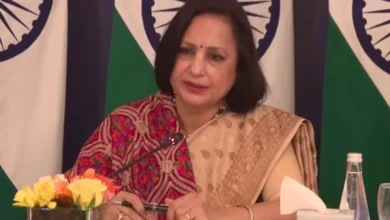
Wong said: “I thanked minister Jaishankar for his condolences and for the Indian government’s messages of support. We agreed that there must be no place for antisemitism, violence and terrorism.”
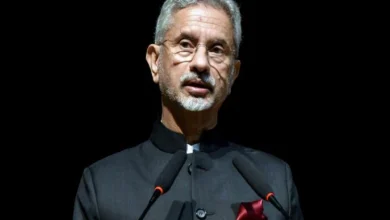
Jaishankar said on social media that he spoke to Wong and conveyed “our deepest condolences about the Bondi beach terrorist attack and offered our fullest support”. He didn’t give details.
Australia’s 9 News channel aired an interview with a former colleague of Naveed Akram, an out of work bricklayer, who said the detained attacker’s “background was Indian and Italian”. The former colleague said Naveed Akram’s mother is Italian and his father Indian.
The former colleague also said Naveed Akram spoke about religion sometimes “but he wasn’t somebody to force things down your throat” and that he had a licence for firearms.
Australian officials said on Tuesday morning both men had travelled to the Philippines last month, and the reason for that trip is being investigated.
Bondi beach shooting:Davao is the largest city on the island of Mindanao and is considered the gateway to southern Philippines, which remains a centre of Islamic State activity. In 2017, Islamic State fighters besieged the city of Marawi in Mindanao for five months, and the government launched a massive military operation to root them out.
Australian Prime Minister Anthony Albanese said on Tuesday that the two attackers were motivated by “Islamic State ideology” and were apparently radicalised by beliefs associated with the terror group.