India Allowed Iran’s IRIS Lavan to Dock in Kochi as a “Humanitarian Act,” Says Jaishankar

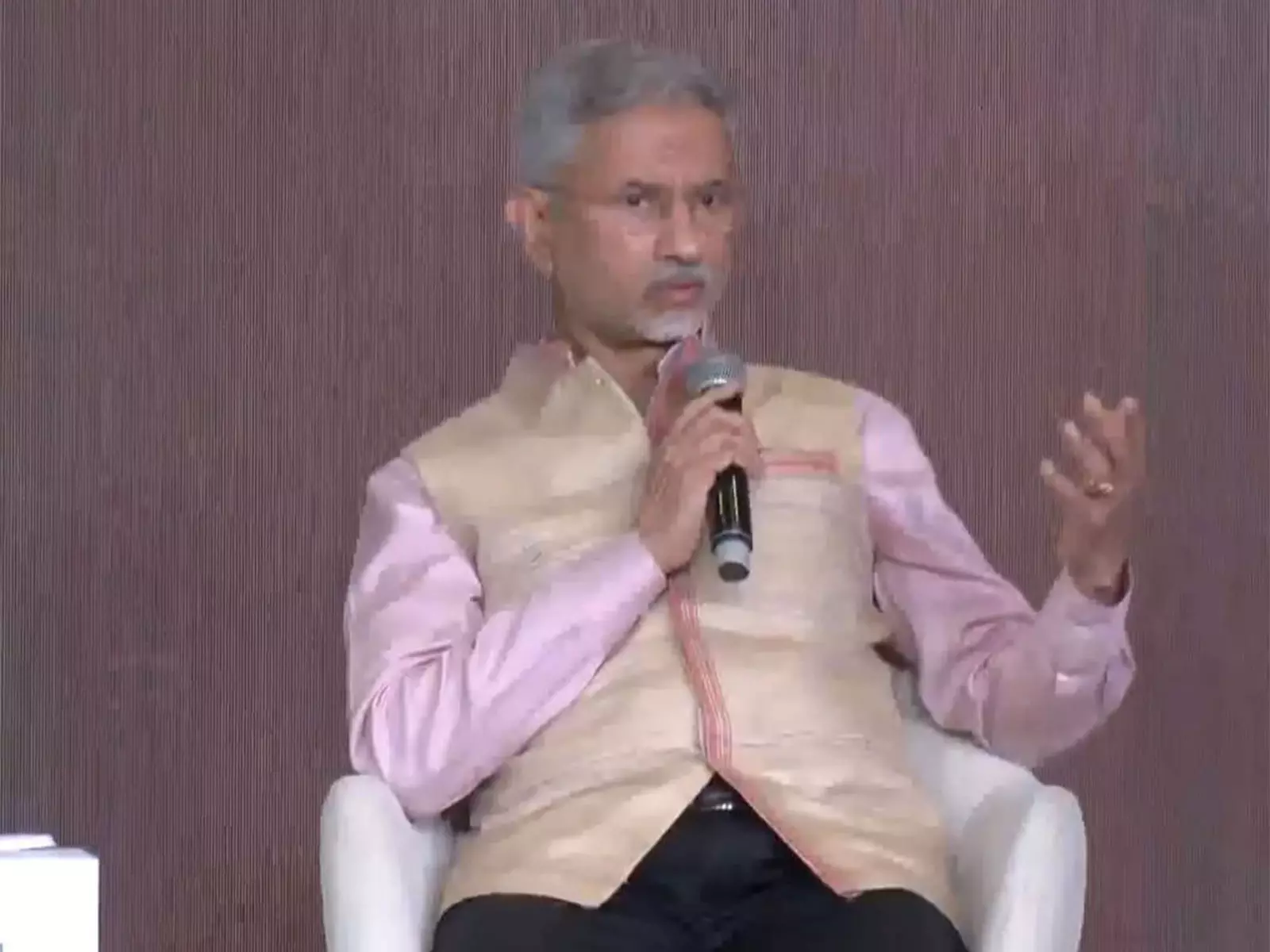
New Delhi: India’s External Affairs Minister S. Jaishankar clarified India’s position on recent developments in the Indian Ocean, stating that allowing the Iranian vessel IRIS Lavan to dock in Kochi was a humanitarian decision.
Speaking at the Raisina Dialogue in New Delhi, the minister referred to the recent incident in which another Iranian ship, IRIS Dena, was reportedly sunk by the United States in international waters while returning from India after participating in an international fleet review.
Jaishankar explained that India offered docking assistance to IRIS Lavan after Iran contacted New Delhi regarding technical issues with the vessel. The ship had been in the region as part of the Iranian Navy’s participation in the International Fleet Review and MILAN 2026, held from February 15 to 25.
India approved the docking request on March 1, and the ship’s 183 crew members are currently staying at naval facilities in Kochi.
Jaishankar described the sinking of IRIS Dena as unfortunate and said India adopted a humanitarian approach when the request for IRIS Lavan was received.
“We received a message from the Iranian side that one of their ships, which was closest to our waters at that time, wanted to enter our port due to some problems. I remember this was around the 28th, and by the 1st we said, ‘Okay, you can come.’ It took them a few days to arrive, and they docked in Kochi. Many of those on board were young cadets. They have disembarked and are staying in a nearby facility,” Jaishankar said.
He added that the ship had initially been part of the fleet review but became caught in an unexpected crisis.
“When they set out and arrived here earlier, the situation was completely different. They were coming for the fleet review and then got caught on the wrong side of events. When the ship wanted to come here while facing difficulties, it was the humane thing to do. We looked at the issue from a humanitarian perspective, and I believe we did the right thing,” he said.
Jaishankar also noted that another ship had faced a similar situation near Sri Lanka, where local authorities took their own decision, while the IRIS Dena incident unfortunately ended in the vessel being lost.
Following a distress call from IRIS Dena received by the Maritime Rescue Coordination Centre in Colombo, the Indian Navy launched immediate search-and-rescue operations, deploying a long-range maritime patrol aircraft to assist the Sri Lanka-led rescue effort.
Discussing the broader strategic environment, Jaishankar emphasized the need to understand the realities of the Indian Ocean region beyond online debates.
“There is a lot of discussion on social media, but people must understand the reality of the Indian Ocean. Diego Garcia has been present in the region for five decades. Foreign military deployments in Djibouti began in the early years of this century, and Hambantota Port also emerged during the same period,” he said.
He reiterated that India has invested significantly in the development of the region and that the country’s progress will benefit other Indian Ocean nations.
“The Indian Ocean region is an ecosystem. Compared to many other parts of the world, it is still in the process of recovery and rebuilding. Individual states are making efforts, but the entire region needs to restore trade arrangements and connectivity. Recognizing and supporting this rebuilding process requires significant effort, and Indian diplomacy has invested heavily in it over the past decade,” he said.
Jaishankar also called for greater attention to the safety of merchant ships operating in potentially conflict-prone waters.
“A very large number of people working on merchant ships are Indians. Whenever a cargo vessel is attacked, there is a strong possibility that Indian crew members are on board. This is a serious concern because several lives have been lost in recent days. The interests and safety of our merchant seafarers must receive proper recognition,” he said.
He added that India’s response to the ongoing crisis is also influenced by the presence of 9–10 million Indians living in the Gulf region, whose welfare remains a key priority alongside economic and energy considerations. (ANI)