“India’s Rise Will Be Determined by India”: Jaishankar Says Growth Is Driven by Nation’s Own Strength


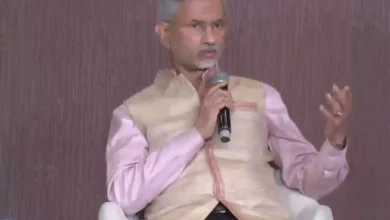
New Delhi: India’s External Affairs Minister S. Jaishankar emphasized that India’s global trajectory will be self-determined, stressing that the country’s development is rooted in its own domestic capabilities and resilience.
Speaking at the Raisina Dialogue, Jaishankar said that if India wants to build a stronger identity and engagement with the Indian Ocean, it must be backed by resources, actions, commitments, and practical projects.
“If we want to develop a special sense of identity regarding the Indian Ocean, it must be supported by resources, actions, commitments, and practical initiatives. There are many dimensions to the development of the Indian Ocean. The reason the Indian Ocean is the only ocean named after a country is because we are located right in the middle of it. Our development will benefit other countries in the region. Those who work with us will benefit even more. India’s rise will be determined by India itself. It will be defined by our strength, not by the mistakes of others,” he said.
Jaishankar further highlighted that India has invested significantly in the development of the region and that the country’s growth will positively impact nations across the Indian Ocean region.
“The Indian Ocean region is an ecosystem. Compared to other parts of the world, the Indian Ocean is much more in the process of recovery and rebuilding. Individual states are doing so, but the entire region needs to restore trade arrangements and connectivity. This comprehensive rebuilding process of the Indian Ocean must be recognized, and it requires considerable effort. Over the past decade, Indian diplomacy has invested heavily in this process,” he said.
Addressing recent turbulent developments in the Indian Ocean, Jaishankar referred to the sinking of the Iranian vessel IRIS Dena, which was returning after participating in an international fleet review in India. According to him, the ship was sunk by the United States while it was in international waters.
Speaking at the Raisina Dialogue on Saturday, the minister highlighted India’s contrasting response, noting that New Delhi offered docking assistance in Kochi to another Iranian vessel, IRIS Lavan.
The IRIS Lavan, which had taken part in the International Fleet Review and MILAN 2026, had earlier docked in Kochi due to technical issues. Iran reportedly contacted India shortly before the IRIS Dena incident near Sri Lanka. India approved the docking request on March 1, and the ship’s 183 crew members are currently staying at naval facilities in Kochi.
Jaishankar described the sinking of IRIS Dena as unfortunate and said India adopted a humanitarian approach when Iran requested assistance for IRIS Lavan.
“We received a message from the Iranian side that one of their ships, which was closest to our waters, wanted to come to our port due to some problems. I remember it was on the 28th, and by the 1st we said, ‘Okay, you can come.’ It took them a few days to reach, and they docked in Kochi. Many on board were young cadets. They have disembarked and are staying in a nearby facility. When they arrived earlier, the situation was completely different—they were here for the fleet review but got caught in the wrong side of events. When the ship wanted to come here while facing difficulties, it was the humane thing to do. We looked at this from a humanitarian perspective beyond legal considerations, and I believe we did the right thing,” the minister said.
Following the distress call received by the Maritime Rescue Coordination Centre in Colombo, the Indian Navy launched immediate search operations, deploying a long-range maritime patrol aircraft to support the Sri Lanka-led rescue efforts.
Expanding on the broader strategic reality of the Indian Ocean, Jaishankar urged observers to understand the region’s complexities beyond contemporary social media debates.
“There is a lot of debate on social media about this. Please understand the reality of the Indian Ocean. Diego Garcia has been present in the Indian Ocean for five decades. The deployment of foreign forces in Djibouti began in the early years of this century. Hambantota Port also emerged during this period,” he said.
The minister also called attention to the safety of merchant ships operating in potentially conflict-prone waters. He noted that a large number of Indians work aboard commercial vessels and are directly exposed to risks when such ships are attacked.
“A very large number of people working on merchant ships are Indians. Whenever a cargo vessel is attacked, there is a strong possibility that some Indian crew members are on board. This is a serious matter because several lives have been lost in recent days. The interests and safety of our merchant seafarers must receive proper recognition,” he said.
Jaishankar added that India’s approach to handling the current crisis is also influenced by the presence of nearly 9–10 million Indians living in the Gulf region, whose welfare remains an important priority alongside economic and energy concerns.
“Countries naturally have their own interests—economic or energy-related—and our policies will take all these factors into account. I believe merchant shipping has not received the prominence it deserves,” he said. (ANI)