Rafale, S-400, BrahMos Becoming Obsolete? How Cheap But Deadly Weapons Are Changing Modern Warfare

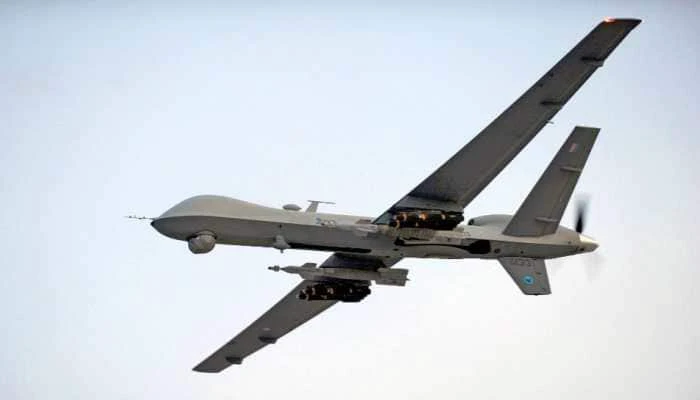
Cheap Weapons Warfare: For centuries, wars were decided by whoever could afford the biggest guns, the fastest aircraft and the heaviest armour.
That logic is breaking down. Across todays battlefields, something far more unsettling is happening, as weapons that cost a few thousand dollars are taking down machines worth millions.
This is no longer a theory debated in military journals. It is playing out in real time in Ukraines skies, Gazas alleyways, the Red Seas shipping lanes and the rugged terrain of the Caucasus. The lesson emerging from these conflicts is unavoidable. Modern warfare is no longer ruled only by Rafales, S-400 missile shields or stealth fighters. It is being changed by cheap, smart and expendable systems that punch far above their weight.
Small drones, loitering munitions, autonomous vehicles and AI-enabled sensors are changing the economics of war. A weapon that costs less than a car can now destroy a tank, disable a warship or shut down an airbase. This reversal of cost and impact is not temporary. It is structural. And for India, it carries implications.
When Expensive Platforms Stop Being Enough
For decades, military power meant owning capital-heavy platforms. Tanks symbolised land dominance. Fighter jets defined air superiority. Aircraft carriers projected power far from home shores. These systems still matter, but recent wars have exposed a truth that they are no longer decisive on their own.
In Ukraine, cheap quadcopters have hunted and destroyed battle tanks. In the Black Sea, naval drones forced a much larger navy to pull back. In the Middle East, low-cost systems have struck airbases and shipping lanes that were once considered secure.
What makes this change so dangerous is accessibility. The entry barrier for effective military action has collapsed. Where air power and precision strikes were once monopolised by states, today even small groups equipped with commercial drones, basic AI tools and off-the-shelf sensors can disrupt operations, impose real costs and dominate the information narrative.
Deterrence, therefore, cannot rest only on owning expensive platforms anymore. It must also be built around toughness, how well a force can absorb losses from cheap and persistent attacks without losing the ability to fight.
Chinas Robotics Push, Pakistans Role
No country has embraced this transformation more aggressively than China. Beijing has poured resources into artificial intelligence, robotics and autonomous warfare, not just for experimentation but for scale.
Chinese defence firms are producing unmanned aerial vehicles, loitering munitions, robotic ground platforms and autonomous logistics systems in large numbers. Crucially, these are not meant only for the Peoples Liberation Army. They are designed for export.
Pakistan has become one of the main recipients and testbeds of this ecosystem. Over the years, China has supplied Islamabad armed drones, surveillance platforms and electronic warfare tools. The next phase is expected to include autonomous sentry systems, robotic ground vehicles and AI-driven battlefield management.
For Pakistan, these systems offer a way to narrow the gap with Indias conventional strength without matching it tank for tank or jet for jet. For China, Pakistan functions as both a strategic partner and a live laboratory.
The real concern for India lies in this combination. Cheap autonomous systems in Pakistani hands could be used along the Line of Control (LoC) for infiltration support, surveillance and provocation without crossing clear red lines. Robotic sensors and armed drones could reduce manpower needs while increasing pressure below the nuclear threshold, creating a constant grey-zone challenge.
A Battlefield That Leaves No Time To Think
Cheap autonomous weapons compress time and space in combat. Drones deliver real-time surveillance. AI systems process information faster than human operators. Swarms overwhelm defences by sheer numbers rather than precision.
The result is a battlefield where hiding is difficult, reaction time is minimal and mistakes are punished instantly.
For India, the implications cut across regions. Along the northern borders, small drones can track patrols and guide artillery fire. Along the western front, drones can assist infiltration, drop weapons or strike infrastructure. Even far from borders, commercial drones can be used by non-state actors for reconnaissance and intimidation.
The psychological impact is just as severe. Constant aerial presence erodes morale. Soldiers and civilians begin to operate under the assumption that they are always being watched. Movement, concentration and logistics all change. In this environment, survival depends on who adapts faster.
Why India Must Shift From Platform-Centric Thinking
Indias military modernisation has traditionally focussed on acquiring high-end platforms. That focus is necessary, but it is no longer sufficient.
What India now needs is a move towards mass-centric capability. This is not about troop numbers. It is about mass in sensors, shooters and decision-making nodes.
Infantry units need organic drone swarms and counter-drone tools. Armour formations must operate with unmanned scouts, decoys and drone-linked targeting. Artillery must be tightly integrated with real-time drone feeds. High-value platforms must be surrounded by layers of cheap, expendable systems that increase survivability and complicate enemy planning.
This approach does not replace expensive assets. It protects them. It also restores deterrence by signalling that India can absorb attrition without freezing up or escalating uncontrollably.
Defending Against Weapons That Cost Almost Nothing
Defence against cheap threats cannot rely on costly interceptors alone. Shooting down a low-cost drone with a missile worth crores is neither sustainable nor scalable.
India needs a layered counter-drone architecture that prioritises soft-kill solutions. Electronic jammers, spoofing tools, directed-energy weapons, rapid-fire guns and AI-driven detection systems must work together seamlessly.
Critical infrastructure such as airbases, ammunition depots, border posts and civilian installations needs integrated protection. Training is only as vital. Soldiers and internal security forces must learn to operate in environments saturated with drones, surveillance and electronic interference.
Camouflage, dispersion, deception and mobility are no longer old doctrines. They are survival skills in an age of constant observation.
Industry, Chips And Strategic Independence
Cheap weapons only remain cheap if they can be produced at scale. Indias defence industry must move away from boutique manufacturing and towards modular and rapidly upgradeable systems.
Startups, private firms and public sector units must be linked into a single ecosystem where speed of iteration matters more than perfection. Waiting years for flawless platforms is no longer an option.
At the heart of this challenge lies electronic dependence. Autonomous systems rely on chips, sensors and AI algorithms dominated by a handful of global players. Long-term reliance on external suppliers in this domain creates strategic vulnerability.
Building indigenous semiconductor capacity, AI research and embedded systems manufacturing will take time, possibly decades. But without this effort, India risks entering future wars where the most critical components are beyond its control.
Doctrine, Training And Leadership Matter More Than Ever
Technology without doctrine is noise. Military education must evolve to reflect multi-domain warfare where land, air, cyber and space intersect at the tactical level.
Young officers must be trusted with faster decision-making. Exercises must simulate drone swarms, electronic disruption and robotic adversaries. Lessons from Ukraine and Gaza cannot remain academic observations. They must be institutionalised.
Adaptation has to be continuous, not reactive.
A Warning And An Opportunity
Cheap weapons have made the battlefield more lethal, more transparent and more unpredictable. For India, facing a technologically assertive China and an adaptive Pakistan, the challenge is immediate.
But this is not a story of weakness. It is a story of opportunity. India has the talent, the industrial base and the strategic awareness to adapt, if it acts with urgency.
The wars of the future will not be won by those with the most expensive platforms, but by those who combine mass, resilience and innovation. Preparedness will be measured by how quickly it can think, build and evolve, not by what a nation can buy.