Venezuela Loosens Decades-Long State Grip on Oil Industry
Socialist stronghold cracks as private companies gain control, U.S. sanctions ease

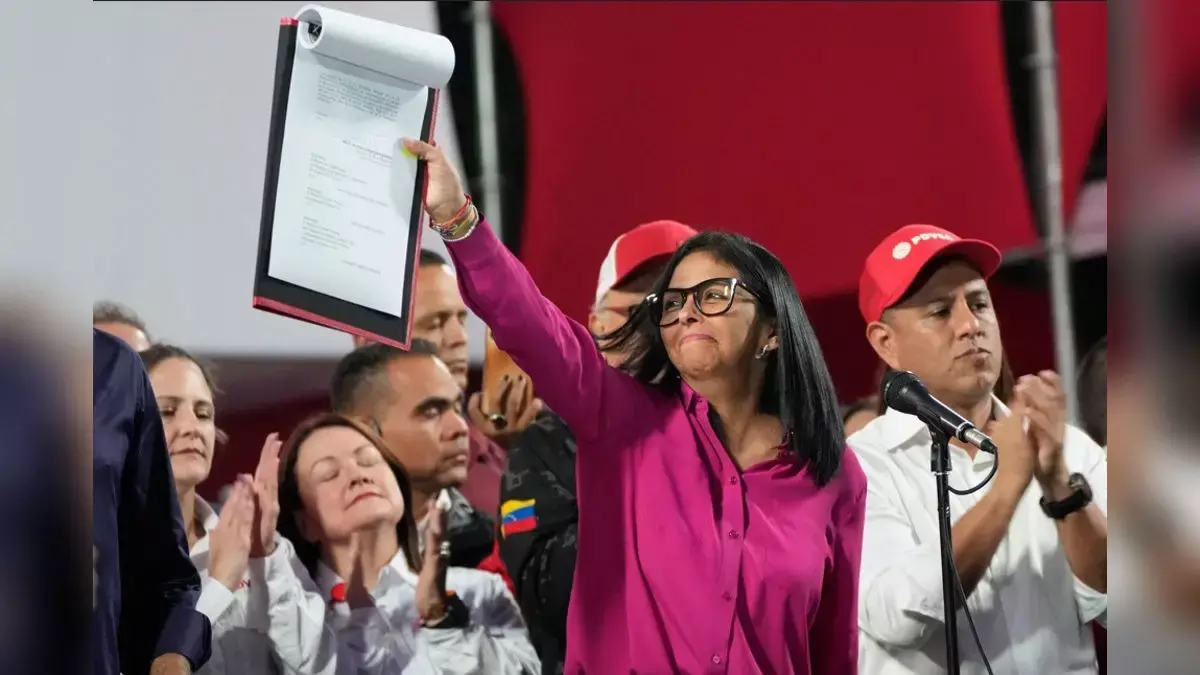
Venezuela has taken a dramatic turn that could redefine its economy and global standing. In a move that signals the end of decades of tight government control, the country has officially opened its oil sector to private companies—reversing the core principles of the socialist model that ruled for more than 20 years.
On Thursday, Acting President Delcy Rodríguez signed a sweeping reform of Venezuela’s energy law, clearing the way for privatization in the oil industry. The decision marks one of the most significant economic shifts in the nation’s modern history.
🛢️ Parliament Acts, Washington Responds
Earlier in the day, Venezuela’s National Assembly approved major changes to the energy industry law. Almost simultaneously, the U.S. Treasury Department began easing long-standing restrictions on Venezuelan oil, allowing U.S. energy companies greater freedom to operate in the South American nation.
The licenses issued by Washington, however, come with strict conditions: entities linked to China, Russia, Iran, North Korea, or Cuba are explicitly barred from participating in transactions.
Together, the moves by Caracas and Washington signal a major geopolitical and economic realignment.
💬 “We Are Talking About the Future”
“This is about the future,” Rodríguez said. “It’s about the country we are going to leave to our children.”
Her remarks came days after U.S. President Donald Trump said his administration intended to bring foreign investment into Venezuela’s struggling oil sector and exert control over its oil exports to revive the industry.
🏭 Private Companies to Control Production
Under the new law, private companies will gain control over oil production and sales. Crucially, it allows disputes to be settled through independent international arbitration, instead of being restricted to Venezuelan courts—long viewed by foreign investors as politically controlled.
The government hopes these guarantees will convince major U.S. oil companies to return, after many pulled out or lost investments during the nationalizations of the past two decades that favored the state oil giant PDVSA (Petróleos de Venezuela S.A.).
📊 Taxes, Royalties, and New Incentives
The revised law:
-
Adjusts extraction taxes
-
Sets a 30% royalty cap
-
Allows the executive branch to tailor terms project-by-project based on investment needs and competitiveness
It also removes the mandate that disputes be handled exclusively by Venezuelan courts—one of the biggest deterrents for foreign investors.
⚠️ Opposition Warns of Corruption Risks
While ruling-party lawmakers hailed the reform as a step that will “transform the economy,” opposition leaders voiced serious concerns.
Opposition lawmaker Antonio Ecarri urged lawmakers to add transparency and accountability provisions, including a public website disclosing funding and contracts. He warned that weak oversight has historically fueled systemic corruption.
“Let there be light in the oil industry,” Ecarri said.
👷 Workers Celebrate, History Rewinds
Oil workers wearing red jumpsuits and hard hats celebrated the bill’s approval inside the legislative palace, waving Venezuelan flags and marching alongside government supporters.
The last major reform of the oil law came over 20 years ago under former President Hugo Chávez, who made strict state control of oil the cornerstone of his socialist revolution. At the time, soaring oil prices flooded Venezuela with petrodollars, turning PDVSA into the backbone of government revenue.
But years of mismanagement, falling oil prices, nationalizations, and U.S. sanctions crippled the industry. Since 2014, more than 7 million Venezuelans have fled the country amid a devastating economic collapse—despite Venezuela holding the world’s largest proven crude reserves.