What Will Be the Impact on the India–US Trade Deal After the Supreme Court’s Tariff Ruling? Trump Responds
US President Says “Nothing Has Changed” Despite New Global Tariff Announcement

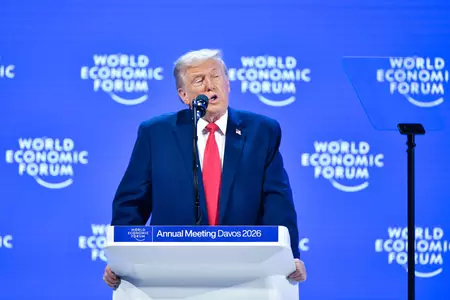
New Delhi: Following the recent tariff-related ruling by the Supreme Court of the United States, questions have emerged about its potential impact on the recently concluded trade agreement between India and the United States. During a press conference, US President Donald Trump was asked whether the ruling would alter the terms of the bilateral trade arrangement.
Responding to the query, Trump said, “No, nothing has changed. They will pay tariffs, and we will not. Our deal with India is that they will pay tariffs. It’s not like before. Prime Minister Modi is a gentleman, actually a very nice person, but he was much smarter than those people. He was taking advantage of us. So we made a deal with India and now it is a fair agreement. We are not paying them tariffs; they are paying tariffs. We flipped it a little.”
At the beginning of his second term, Trump had imposed a 25 percent tariff on India. An additional 25 percent tariff was levied due to India’s purchase of oil from Russia, taking the total tariff burden to 50 percent. However, under the recently signed interim trade agreement, the 25 percent tariff on India was reportedly reduced to 18 percent. The additional 25 percent tariff linked to Russian oil purchases was also proposed to be withdrawn.
After the Supreme Court ruling, Trump announced a global 10 percent tariff. This means that India, like other countries, would now be subject to a 10 percent tariff. For Indian exporters, this could raise concerns, as Indian exports are currently subject to a 3 percent Most Favoured Nation (MFN) rate. Under the new policy, an additional 10 percent duty could apply.
The White House stated that the new measure imposes a 10 percent ad valorem import duty on goods entering the US for a period of 150 days. The temporary import duty will take effect at 12:01 a.m. Eastern Standard Time on February 24. Certain goods will be exempted to meet the needs of the US economy or to address international payment concerns more effectively.
Exempted categories include certain critical minerals; metals used in currency and bullion; energy and energy products; natural resources and fertilizers that cannot be sufficiently produced domestically; select agricultural products such as beef, tomatoes, and oranges; pharmaceuticals and pharmaceutical ingredients; certain electronics; passenger vehicles, light trucks, medium- and heavy-duty vehicles, buses, and related auto parts; specific aerospace products; informational materials such as books; donations; and accompanying goods.
The full economic impact of the decision on India–US trade ties is expected to become clearer in the coming months as the revised tariff structure is implemented.