Japan, South Korea on High Alert After North Korea Fires Ballistic Missiles

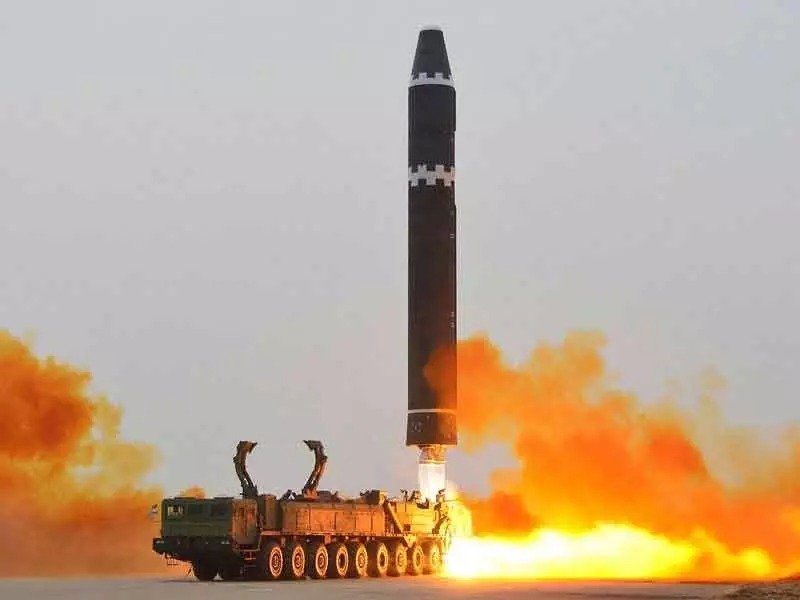
Tokyo: Japan went on high alert Sunday morning after North Korea launched multiple ballistic missiles, prompting swift security responses across the region. The Japanese government activated top-tier crisis management protocols to ensure public safety and regional stability amid the fresh provocation.
Confirming the development, Prime Minister Sanae Takaichi said the launches occurred around 6:00 AM. In a statement, she noted that the suspected ballistic missiles had already fallen outside Japan’s Exclusive Economic Zone (EEZ). She added that Japan is working closely with the United States and South Korea to analyze the situation and assess the international response.
In response to the perceived threat, Japanese authorities mobilized emergency systems to minimize risks to maritime and air traffic. The Prime Minister detailed that an emergency response team was convened at the Crisis Management Center in the Prime Minister’s Office immediately after the launches. Relevant ministries and agencies were instructed to gather and analyze information thoroughly.
She emphasized that the administration’s priority is to provide timely and accurate information to the public, ensure the safety of aircraft and vessels, and remain fully prepared for any emergency. The development highlights ongoing regional tensions and underscores Japan’s firm stance on national security.
According to Al Jazeera, this marks North Korea’s seventh ballistic missile launch this year and the fourth in April alone. South Korea’s military stated that the missiles were launched from the eastern coastal city of Sinpo at around 6:10 AM local time.
In a precautionary move, South Korea has intensified surveillance and is maintaining close coordination with the United States and Japan. The South Korean presidential office also convened an emergency security meeting amid rising concerns over Pyongyang’s continued weapons activities.
These launches are seen as a direct violation of United Nations Security Council resolutions that prohibit North Korea’s missile program. However, Pyongyang has repeatedly rejected such sanctions, claiming they infringe on its sovereign right to self-defense.
The timing of the tests is considered significant, coming ahead of a planned meeting between Chinese President Xi Jinping and former U.S. President Donald Trump, where North Korea is expected to be a key topic of discussion.