Delimitation Showdown: Govt vs Opposition Clash Ahead of Parliament Session; What’s the Full A-B-C-D of the Issue?

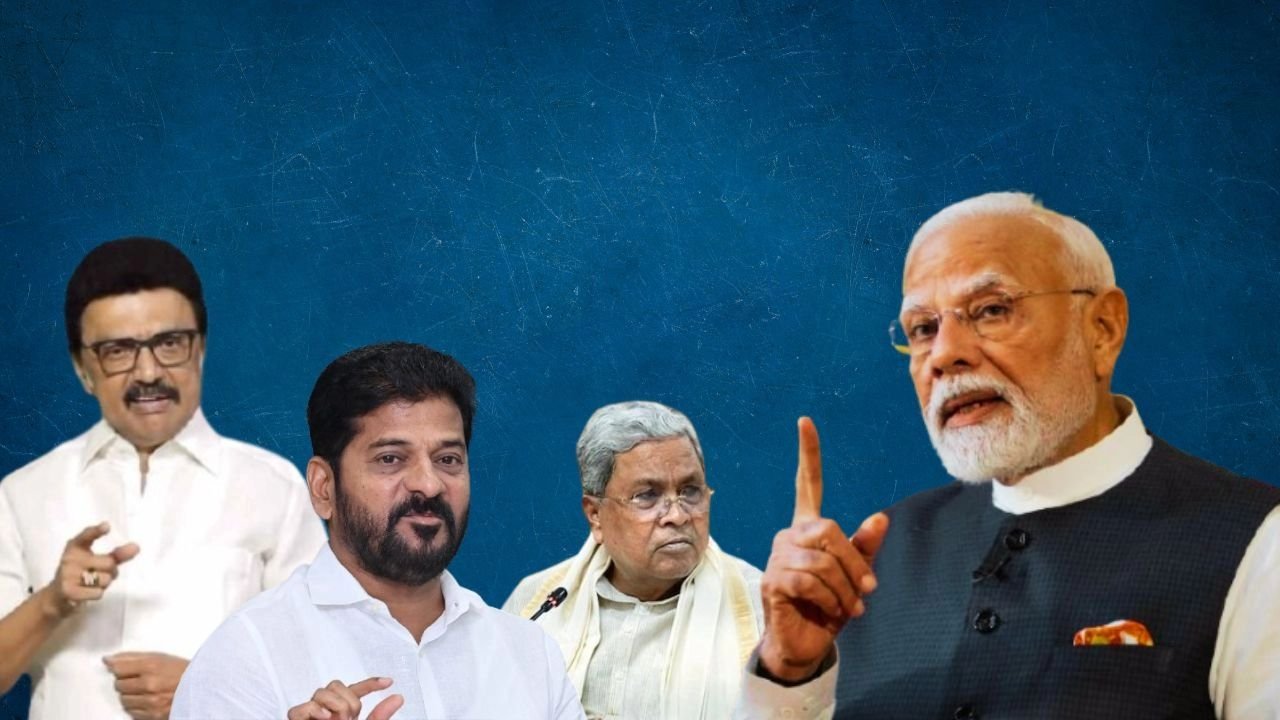
A major political face-off is brewing ahead of the three-day Parliament session starting tomorrow, as the government prepares to introduce key bills related to delimitation. The opposition has strongly objected, raising concerns over regional imbalance, while the government insists the move will benefit all states.
What Bills Will Be Introduced?
The government is set to table three major proposals:
-
Delimitation Bill, 2026: Proposes setting up a delimitation commission headed by a Supreme Court judge to redraw constituency boundaries and redistribute seats among states based on the latest census. It will also determine reservations for SCs, STs, and women.
-
Constitution (131st Amendment) Bill, 2026: Seeks to expand the strength of the Lok Sabha from 543 to 850 members (815 from states and 35 from Union Territories).
-
Union Territories Laws (Amendment) Bill, 2026: Aims to align UT laws with the new constitutional framework on delimitation and women’s reservation.
Why Is the Opposition Protesting?
Opposition parties, including the Indian National Congress, fear that delimitation based on population could tilt political power in favor of northern states.
Leaders argue that southern states like Tamil Nadu, Kerala, and Karnataka—which have effectively controlled population growth—may lose relative representation compared to states like Uttar Pradesh.
For instance, the current seat gap between Uttar Pradesh (80) and Kerala (20) could widen further to 120 vs 30, increasing regional imbalance.
Sonia Gandhi has warned that such changes could significantly alter political representation and weaken constitutional principles, stressing that any increase in Lok Sabha seats must be fair.
Southern States Warn of Protests
Chief Ministers of non-BJP ruled states have raised strong objections:
-
M. K. Stalin warned of a large-scale agitation if Tamil Nadu faces injustice.
-
Revanth Reddy termed the move unfair and urged Narendra Modi to convene an all-party meeting.
-
Siddaramaiah cautioned that states that successfully controlled population should not be penalized and their voice in Parliament must not weaken.
What Is the Government’s Argument?
The government says current seat distribution is still based on the 1971 Census, despite massive demographic changes since then. It argues that delimitation has been delayed for decades and needs to be updated.
The new framework will allow:
-
Fresh constituency boundaries
-
Implementation of women’s reservation
-
Representation based on latest population data
“Southern States Will Also Benefit”
Responding to criticism, Union Minister Kiren Rijiju said that increasing Lok Sabha seats to 850 will benefit southern states as well, since seats will grow proportionally.
He dismissed fears of loss, stating that every region and community has been considered in the proposal. According to him, no state will be at a disadvantage, and claims suggesting otherwise are misleading.