Secrecy, Speed, Strike: Colonel Breaks Down Operation Sindoor – EXCLUSIVE

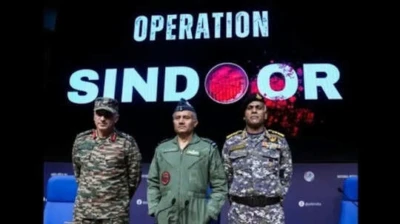
Nearly a year after the deadly Pahalgam terror attack that killed innocent civilians and triggered a wave of outrage across the country, Indian armed forces’ Operation Sindoor remains a defining moment in the counter-terror response.
The operation, marked by precision strikes on terror infrastructure, was driven by what one officer described as a mix of “revenge” and “justice.”
Speaking to Timesnownews.com about the mission, Col Kaushank Lamba said maintaining secrecy was one of the toughest challenges they faced as the operation was launched on the night of May 7. His unit had to move from a distant location into the Kashmir Valley without leaving operational “signatures” that could alert the enemy.
He added that anticipating enemy retaliation and staying a step ahead was equally critical. “We had to think ahead, plan mitigation measures, and be ready to respond,” he said.
Below is the full transcript of the interview
Q1. What personally was the most challenging moment for you during Operation Sindoor?
Col Kaushank Lamba: There were a number of challenging moments while the operations were being prosecuted. If I have to list them all out, it won’t be possible, so I’ll say major challenges. So the first and the foremost challenge was to maintain the secrecy of it all. Since in my case, my unit had to move from a very far off area, come to Kashmir Valley and then operate there and carry out strikes on enemy terror infrastructure. This kind of a movement and preparation can give away a lot of signatures. So first and foremost challenge was to maintain the secrecy in the physical as well as informational domains. That was first.
Secondly, the challenge also was to anticipate what actions would enemy take on us while we start our precision strikes and we engage the enemy. So what would they do anticipating that? Ensuring mitigation measures so that we prevent the enemy from harming us and thereafter give a reply to the enemy’s actions.
So this was another challenge to anticipate, plan, get measures into place, think one step ahead. And thirdly, it would be to continuously keep building the morale and motivation of the troops and keep everybody jostled because my unit had just come from outside and there were a very large number of young soldiers who had not seen live operations ever in their lives. So to keep them motivated, to keep their morale high was another small bit of a challenge.
Q2. Second question, without revealing too many sensitive details, what made this operation different from others that you have been a part of?
Col Kaushank Lamba: So regularly whatever operations we participate in are generally of a routine nature. Like a unit is deployed in counterinsurgency operations, another unit is deployed in line of control to prevent infiltration and some units are given hinterland security. So these are all routine operations which keep on happening as we speak. This operation was special because of two, three major factors. First of all, it had a fervour of that revenge and that justice to be served because innocent civilians had died. It was a terror attack which the enemy had perpetrated and so all our bloods were boiling.
So this is the first factor that it had an element of revenge or an element of justice to be served in it. Secondly, the scale of operation was pretty high. So you’ve seen that army, air force, navy, all these elements were involved and they were working in a very cohesive manner to carry out strikes on enemy terror infra to serve justice to what enemy had done.
And thirdly, you can also say that the scope of operation and the technologies which emerged in this operation were pretty relatively new. So in these aspects, we can summarize that the operation was much different from the previous ones.
Q3. Operation Sindoor showcased India’s superiority in air defense. Apart from S-400, we have most of indigenously built weapons guarding our skies. Can we say that we have achieved 100% Atma Nirbharta in air defense?
Col Kaushank Lamba: This question is much beyond my pay grade so I would not like to comment because first of all, it is not my domain. I am an artillery guy. So first of all, it would not be correct on our part to plus to comment upon the nation achieving Atma Nirbharta in air defense is a very big level question. I would not be able to comment too much on that.
Q4. What role did intelligence play in shaping your moves on the ground?
Col Kaushank Lamba: Very significant one I would say. How I see that is if you strike a terror infrastructure or a launch pad or a hub known to be used as an indoctrination cell by the terrorists but you don’t have clear information or intelligence whether terrorists are even present there or not, your strike has no meaning. So to corroborate what you are striking, when you are striking and how effective that’s going to be is a very very pivotal role which the intelligence plays in that.
Now intelligence can be categorized into various parts. So there is human intelligence which people give. Then there is electronic intelligence. Then there is signal intelligence. There is satellite intelligence. There is also open source intelligence.
So all these intelligence components are amalgamated at the higher headquarter and they too play a very very pivotal role in shaping the battlefield and giving us a decisive edge in what to engage, when to engage and how to engage.